
On-Page SEO for Local Businesses: A Central Massachusetts Guide
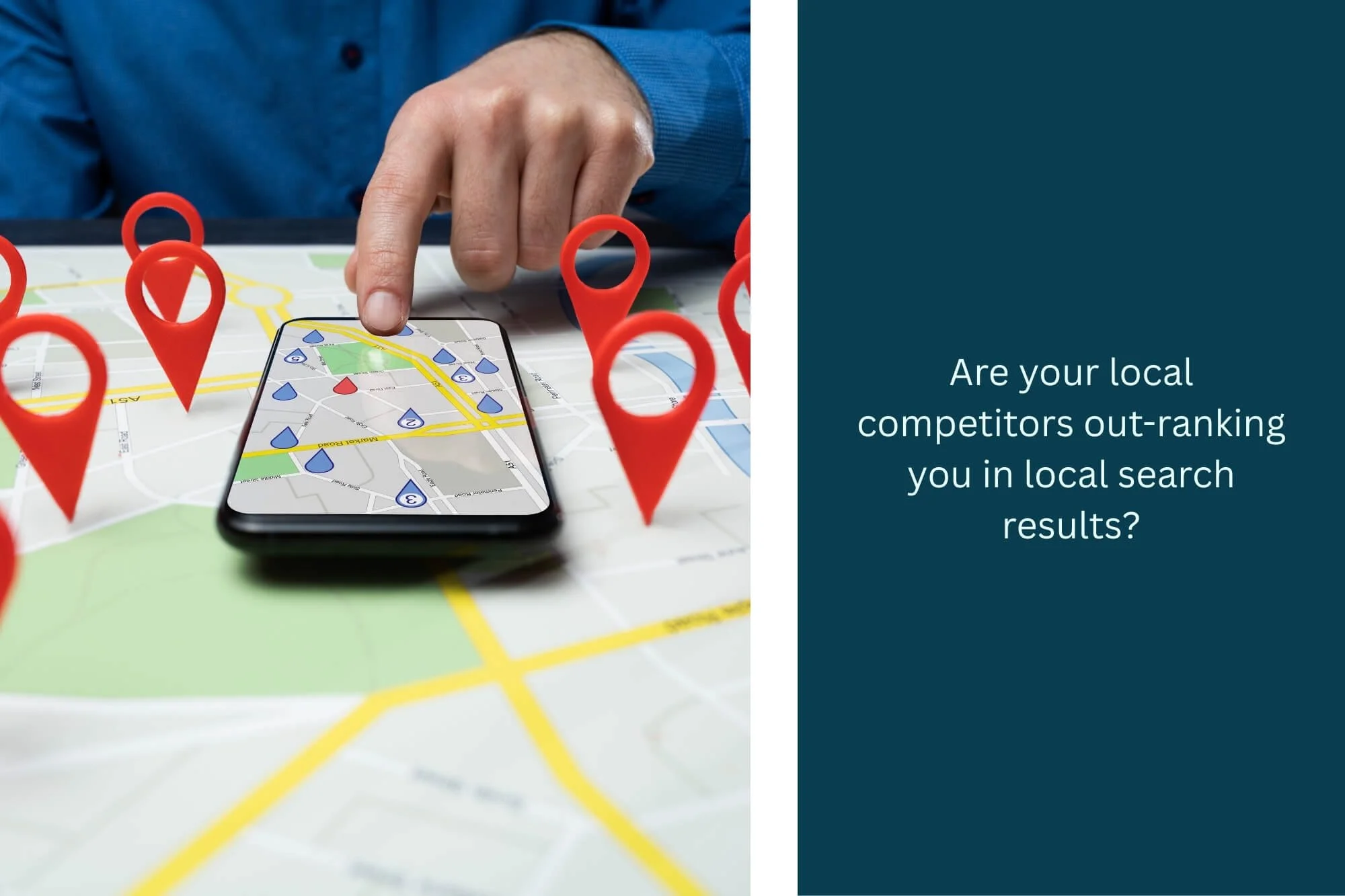
You have a beautiful website. You've optimized your Google Business Profile. You're posting on social media. But when someone in Worcester searches for exactly what you offer, your competitors show up instead of you.
What's missing? On-page SEO.
On-page SEO is everything you do directly on your website to help Google understand what you do, where you're located, and why you're the best choice for local customers. It's the foundation of ranking well in local search results.
The good news? Unlike off-page SEO (getting backlinks and citations), on-page SEO is completely within your control. You can implement these strategies today and start seeing results within weeks.
In this guide, I'll walk you through exactly how to optimize your website for local search in Central Massachusetts—whether you're a law firm in Worcester, a restaurant in Framingham, or a contractor in Grafton.
This post is part of our local SEO series for Massachusetts businesses. Also check out:

What Is On-Page SEO (And Why It Matters for Local Businesses)
On-page SEO refers to all the optimizations you make directly on your website to improve search engine rankings. This includes:
Title tags and meta descriptions
Header tags and content structure
Keywords and location targeting
Internal linking
Image optimization
URL structure
Schema markup
User experience signals
For local businesses in Central Massachusetts, on-page SEO is how you tell Google:
What services you offer
Where you're located
Which areas you serve
Why you're relevant for local searches
The impact is real:
When someone in Framingham searches "family lawyer near me," Google looks at your on-page SEO to decide if your website should appear in the results. Better on-page optimization means higher rankings, which means more visibility and more customers.
Think of on-page SEO as the conversation between your website and Google. The clearer and more specific that conversation, the better Google can match you with local customers who need your services.
Let's dive into exactly how to optimize each element.
1. Title Tags: Your Most Important On-Page SEO Element
Your title tag is the clickable headline that appears in Google search results. It's also what shows up in browser tabs when someone visits your page.
Why title tags matter:
Title tags are one of the top three ranking factors for local SEO. They tell Google what your page is about and whether it's relevant for specific searches.
Title Tag Best Practices for Central Mass Businesses:
Format for homepage: [Business Name] | [Primary Service] in [City], MA
Examples:
"Smith & Associates | Family Law Attorney in Worcester, MA"
"Bella Cucina | Authentic Italian Restaurant in Framingham, Massachusetts"
"ProTech HVAC | Heating & Air Conditioning in Marlborough, MA"
Format for service pages: [Service] in [City], MA | [Business Name]
Examples:
"Family Law Attorney in Worcester, MA | Smith & Associates"
"Air Conditioning Repair in Framingham | ProTech HVAC"
"Kitchen Remodeling in Shrewsbury, Massachusetts | BuildRight Contractors"
Format for location pages (if you serve multiple areas): [Service] in [City], MA | [Business Name]
Examples:
"Web Design Services in Worcester, MA | Studio 3 Elm"
"Plumbing Services in Marlborough, Massachusetts | Quick Fix Plumbing"
Title Tag Rules:
✓ Keep it under 60 characters (or it gets cut off in search results)
✓ Include your primary keyword (the service people search for)
✓ Include your location (city, region, or "Massachusetts")
✓ Put the most important words first (if you need to prioritize, put location and service before business name)
✓ Write for humans, not just Google (it needs to be compelling enough to click)
✗ Don't keyword stuff ("Worcester Plumber | Best Plumber Worcester | Worcester Emergency Plumber" = spam)
✗ Don't use all caps or excessive punctuation
✗ Don't duplicate title tags across pages (every page should have a unique title)
How to Add Title Tags:
On Squarespace:
Go to the page editor
Click the gear icon (Page Settings)
Go to the SEO tab
Enter your title in "SEO Title"
On WordPress:
Edit your page/post
Scroll to the SEO section (Yoast, Rank Math, or similar plugin)
Enter your title in "SEO Title"
Pro tip: Google may rewrite your title tag if it thinks it can create a better one. If this happens consistently, your title might be too promotional or not relevant enough to the page content.
2. Meta Descriptions: Your Sales Pitch in Search Results
The meta description is the snippet of text that appears below your title tag in search results. While it doesn't directly impact rankings, it heavily influences click-through rates.
Think of it as your elevator pitch in 155 characters.
Meta Description Best Practices:
Format: [What you do] in [location]. [Unique value proposition or key benefit]. [Call-to-action]. [Optional: Service area expansion].
Examples:
For a Worcester law firm:
"Experienced family law attorney in Worcester, MA. Compassionate representation for adoption, custody, and estate planning. Serving Central Massachusetts for over 20 years. Free consultation."
For a Framingham restaurant:
"Authentic Italian cuisine in downtown Framingham. Fresh pasta made daily, extensive wine list, romantic atmosphere. Reservations available. Serving MetroWest Massachusetts since 1998."
For a Marlborough HVAC company:
"Fast, reliable HVAC repair in Marlborough, MA. 24/7 emergency service for heating and AC. Licensed technicians serving Worcester County. Call now for same-day service!"
Meta Description Rules:
✓ Keep it 150-160 characters (including spaces)
✓ Include your location and service
✓ Add a call-to-action ("Call today," "Schedule now," "Visit us")
✓ Highlight what makes you different (years in business, certifications, unique offering)
✓ Write compelling copy that makes people want to click
✓ Include emotional triggers when appropriate (peace of mind, trusted, family-owned)
✗ Don't stuff keywords
✗ Don't use quotation marks (they can get cut off)
✗ Don't duplicate across pages (each page should have a unique description)
✗ Don't make promises you can't keep
How to Add Meta Descriptions:
On Squarespace:
Page Settings → SEO tab
Enter description in "SEO Description"
On WordPress:
Page/post editor → SEO section
Enter in "Meta Description" field
Pro tip: Google may replace your meta description with content from your page if it thinks it's more relevant to the search query. This is normal and not necessarily a problem.
3. Header Tags: Structuring Your Content for Google and Users
Header tags (H1, H2, H3, etc.) organize your content hierarchically. They help Google understand the structure of your page and what's most important.
Think of headers like an outline:
H1 = Main title (only one per page)
H2 = Major sections
H3 = Subsections under H2s
H4, H5, H6 = Further subsections (rarely needed)
Header Tag Strategy for Local Businesses:
H1 Tag (Page Title):
Your H1 should be clear, keyword-rich, and include your location.
Examples:
"Family Law Attorney Serving Worcester, Massachusetts"
"Best Italian Restaurant in Framingham"
"HVAC Repair & Installation | Marlborough, MA"
Rules for H1:
Only ONE H1 per page
Include primary keyword and location
Make it descriptive and clear
Should be similar to (but not identical to) your title tag
H2 Tags (Main Sections):
Use H2s to break your content into major sections, incorporating location keywords naturally.
Example for a Worcester law firm's homepage:
H1: "Experienced Family Law Attorney in Worcester, MA"
H2: "Child Custody & Support in Worcester County"
H2: "Estate Planning for Massachusetts Residents"
H2: "Why Choose Our Worcester Law Firm"
Example for a Framingham restaurant:
H1: "Authentic Italian Dining in Framingham, Massachusetts"
H2: "Our Menu: Traditional Italian Favorites"
H2: "Private Events & Catering in MetroWest MA"
H2: "Visit Our Framingham Location"
H2: "What Our Central Mass Customers Say"
H3 Tags (Subsections):
Use H3s to break down H2 sections further.
Example:
H2: "HVAC Services in Marlborough, MA"
H3: "Air Conditioning Repair & Replacement"
H3: "Furnace Installation & Maintenance"
H3: "Emergency 24/7 Service"
Header Tag Best Practices:
✓ Use headers in hierarchical order (don't skip from H1 to H3)
✓ Include location keywords naturally in some (not all) headers
✓ Make headers descriptive (users should know what the section is about)
✓ Use headers to improve scannability (most people skim web content)
✓ Keep headers concise (aim for under 70 characters)
✗ Don't stuff every header with keywords and location
✗ Don't use headers for styling (use CSS instead)
✗ Don't skip header levels for visual purposes
4. Location Keywords in Content: The Natural Approach
This is where many Central Massachusetts businesses either overdo it or underdo it.
The goal: Mention your location naturally throughout your content in a way that's helpful to users and signals relevance to Google.
Where to Include Location Keywords:
1. Opening paragraph:
Start by establishing who you are and where you serve.
Example:
"Welcome to Smith & Associates, a family law firm serving Worcester and Central Massachusetts since 2005. We understand the unique challenges families face when navigating adoption, custody, and estate planning in our community."
2. Service descriptions:
Work location into how you describe your services.
Example:
"Whether you need emergency AC repair in Framingham or are planning a complete HVAC system replacement for your MetroWest home, our licensed technicians provide fast, reliable service throughout Worcester County."
3. About section:
Your story likely includes your location.
Example:
"After growing up in Worcester and practicing law in Boston for five years, I returned to Central Massachusetts to serve my hometown community. I live in Shrewsbury with my family and am proud to help local families navigate difficult legal matters."
4. Service area descriptions:
Be explicit about where you serve.
Example:
"We proudly serve Worcester, Framingham, Marlborough, Shrewsbury, Westborough, Northbridge, and surrounding Central Massachusetts communities."
Location Keyword Variations to Use:
Don't just repeat "Worcester" 50 times. Mix it up:
Worcester, MA
Worcester, Massachusetts
Worcester County
Central Massachusetts
Central Mass
MetroWest (if applicable)
Greater Worcester area
Specific neighborhoods (West Side, Main South, etc.)
Nearby towns (Shrewsbury, Millbury, Auburn, etc.)
How Much Is Too Much?
A good rule of thumb:
Homepage: 3-5 location mentions in 500-800 words
Service pages: 2-4 mentions in 300-500 words
Blog posts: 1-3 mentions naturally woven in
The test: Read your content out loud. If it sounds forced or repetitive, dial it back.
Example of TOO MUCH:
"If you're looking for a Worcester plumber, our Worcester plumbing company provides Worcester plumbing services throughout Worcester and the Worcester area. We're the top Worcester plumber for all your Worcester plumbing needs."
Better:
"When you need a reliable plumber in Worcester, our family-owned company delivers fast, professional service throughout Central Massachusetts. From emergency repairs to complete installations, we've served Worcester County homeowners for over 15 years."
Content Length and Quality:
Longer, quality content tends to rank better.
For local businesses, aim for:
Homepage: 500-1,000 words minimum
Service pages: 400-800 words each
Location pages: 300-600 words (unique content, not duplicated)
Blog posts: 1,000-2,500 words
Quality matters more than quantity. Write for humans first, search engines second.
5. NAP Consistency: The Foundation of Local SEO
NAP stands for Name, Address, Phone number. This is your business's basic information, and it needs to be EXACTLY the same everywhere online.
Why NAP Consistency Matters:
Google uses your NAP to verify your business and determine if you're legitimate. Inconsistencies create confusion and can hurt your local rankings.
Think of it like this: If your website says "123 Main Street" but your Google Business Profile says "123 Main St." and Yelp says "123 Main Street, Suite 5," Google doesn't know which is correct. This lack of trust can push you down in search results.
Where Your NAP Needs to Match:
Your website (footer, contact page, location pages)
Google Business Profile
Facebook Business Page
Yelp
Better Business Bureau
Industry directories
Yellow Pages
Local citations
Any other online listings
NAP Best Practices:
Pick ONE format and stick with it everywhere:
Address formatting:
✓ Good: "123 Main Street, Worcester, MA 01608"
✗ Inconsistent: Sometimes "Main St." sometimes "Main Street"
Phone number formatting:
✓ Good: "(508) 555-1234" everywhere
✗ Inconsistent: Sometimes "508-555-1234" sometimes "5085551234"
Business name:
✓ Good: "Smith & Associates" everywhere
✗ Inconsistent: Sometimes "Smith & Associates, LLC" sometimes "Smith and Associates"
Where to Put NAP on Your Website:
1. Footer (site-wide):
Include your complete NAP in the footer of every page. This is standard practice and expected.
2. Contact page:
Your contact page should prominently display:
Business name
Complete address
Phone number
Email
Hours of operation
Map (embedded Google Map)
3. Location pages (if you have multiple):
Each location page should have the NAP for that specific location.
4. Schema markup (more on this later):
Add LocalBusiness schema that includes your structured NAP data.
How to Add NAP in Squarespace:
Edit your footer in the website editor
Add a text block
Include your full NAP
Make your phone number clickable:
tel:+15085551234Make your address linkable to Google Maps (optional)
How to Add NAP in WordPress:
Go to Appearance → Widgets or Customize → Footer
Add a text or HTML widget
Include your full NAP with proper formatting
Pro tip: Do a NAP audit quarterly. Search for your business name online and check the top 10-20 listings to ensure consistency. Update any that don't match.
6. Internal Linking: Connecting Your Content
Internal links are links from one page on your website to another page on your website. They help users navigate and help Google understand your site structure and which pages are most important.
Why Internal Linking Matters for Local SEO:
Helps Google discover pages on your site
Passes authority from strong pages to weaker ones
Keeps visitors on your site longer (reducing bounce rate)
Establishes topical relevance (connecting related content)
Improves user experience by guiding visitors to relevant information
Internal Linking Strategy for Central Mass Businesses:
1. Link from your homepage to key pages:
Your homepage has the most authority. Link to:
Main service pages
Location pages
Important blog posts
About page
Contact page
2. Create a clear site structure:
Organize your site hierarchically:
Homepage
Service Category 1
Specific Service A
Specific Service B
Service Category 2
Specific Service C
Locations
Worcester
Framingham
Marlborough
3. Link between related service pages:
Example for a law firm:
Divorce page links to → Child custody page, estate planning page
Estate planning page links to → Elder law page, trust administration page
4. Link from blog posts to service pages:
This is crucial. Every blog post should link to 2-5 relevant service or location pages.
Example:
Blog post: "What to Expect During an Adoption in Massachusetts"
Internal links to:
Your adoption services page
Your Worcester location page
Your "about the attorney" page
Your consultation booking page
5. Link from location pages to relevant service pages:
Your "Web Design in Worcester" page should link to:
Internal Linking Best Practices:
✓ Use descriptive anchor text (the clickable words)
Good anchor text examples:
"Learn more about our adoption services in Worcester"
"Read our guide to on-page SEO"
"Contact our Framingham office"
Bad anchor text examples:
"Click here"
"Read more"
"This page"
✓ Link naturally within content (not just in sidebars or footers)
✓ Link to relevant pages (don't force irrelevant links)
✓ Use 2-5 internal links per page (more for long-form content)
✓ Make sure all important pages can be reached within 3 clicks from the homepage
✗ Don't overdo it (10+ links on a short page looks spammy)
✗ Don't use the same anchor text repeatedly (vary it naturally)
✗ Don't create "orphan pages" (pages with no internal links pointing to them)
How to Audit Your Internal Links:
Use tools like:
Screaming Frog (free for up to 500 pages)
Google Search Console (shows internal linking data)
Ahrefs Site Audit (paid)
Check for:
Broken internal links
Orphan pages
Pages with too few internal links
Opportunities to add contextual links
For more on how your website structure affects local rankings, check out: How to Keep Your Local Business Showing Up on Google
7. Image Optimization: The Often-Overlooked SEO Win
Images make your website more engaging, but they can also help (or hurt) your SEO. Properly optimized images improve your rankings and help your site load faster.
File Names: Your First Optimization Opportunity
Before you upload any image, rename it with descriptive, keyword-rich file names.
Bad file names:
IMG_1234.jpg
Screenshot-2024.png
DSC00456.jpg
Good file names for a Worcester law firm:
worcester-family-law-attorney.jpg
divorce-lawyer-office-worcester.jpg
attorney-john-smith-worcester-ma.jpg
Good file names for a Framingham restaurant:
italian-restaurant-framingham-interior.jpg
homemade-pasta-bella-cucina.jpg
framingham-restaurant-outdoor-seating.jpg
Rules for file names:
All lowercase
Use hyphens (not underscores or spaces)
Include location when relevant
Keep it descriptive but concise
Include your primary keyword when appropriate
Alt Text: Describing Images for Google and Accessibility
Alt text (alternative text) describes what's in an image. It serves two purposes:
Accessibility: Screen readers use alt text to describe images to visually impaired users
SEO: Google uses alt text to understand what the image shows
How to write good alt text:
Format: [What's in the image] + [relevant context/location]
Examples:
For a photo of your Worcester office:
"Smith & Associates family law office building in downtown Worcester, Massachusetts"
For a photo of your team:
"Attorney John Smith and paralegal team at Worcester law firm"
For a photo of completed work (contractor):
"Completed kitchen remodeling project in Framingham, MA"
For a photo of your product:
"Homemade fettuccine alfredo served at Bella Cucina Italian restaurant"
Rules for alt text:
Be descriptive and accurate
Include location when relevant (but don't force it)
Include relevant keywords naturally
Keep it under 125 characters
Don't start with "Image of..." or "Picture of..." (screen readers already say "image")
Don't keyword stuff
Every image should have alt text (except purely decorative images)
Image File Size: Speed Matters
Large image files slow down your website, which hurts both user experience and SEO rankings.
Optimization steps:
Resize images before uploading
Don't upload 5000px wide images if they'll display at 1000px
Match the image size to how it will display
Compress images
Use tools like TinyPNG, ImageOptim, or Squoosh
Aim for under 200KB per image (under 100KB is even better!)
For hero images, under 500KB
Choose the right format
JPEG for photos (use 80-85% quality)
PNG for graphics with transparency
WebP for better compression (if your platform supports it)
SVG for logos and icons (vectors scale perfectly)
How to check your image sizes:
Use Google PageSpeed Insights
Check your website's load time
Look at file sizes before uploading
For detailed strategies on improving your site speed, read: How to Make Your Squarespace Site Load Faster
Image Best Practices Checklist:
Before uploading:
✓ Resize to appropriate dimensions
✓ Compress for web
✓ Rename file descriptively
✓ Use correct file format
After uploading:
✓ Add descriptive alt text
✓ Include title attribute (optional, for tooltips)
✓ Ensure images are responsive on mobile
For more on mobile optimization, see: How to Optimize Your Squarespace Site for Mobile
8. URL Structure: Keep It Clean and Local
Your page URLs (the web address) should be clean, descriptive, and include location keywords when relevant.
URL Best Practices:
Good URL structure:
studio3elm.com/worcester-web-design
studio3elm.com/services/squarespace-design
studio3elm.com/blog/local-seo-central-mass
Bad URL structure:
studio3elm.com/page-1
studio3elm.com/services/web-design-services-worcester-ma-best
studio3elm.com/p=12345
Rules for Local Business URLs:
✓ Keep URLs short and descriptive (under 60 characters ideal)
✓ Include target keyword when possible
✓ Include location for location-specific pages
Good:
/worcester-family-lawyerGood:
/framingham-italian-restaurant
✓ Use hyphens to separate words (not underscores)
✓ Use lowercase only
✓ Remove stop words when it makes sense (a, the, and, of, etc.)
Good:
/adoption-attorney-worcesterNot necessary:
/adoption-attorney-in-worcester-ma
✗ Don't change URLs frequently (creates broken links and loses SEO value)
✗ Don't use numbers or dates unless necessary (blog posts are the exception)
✗ Don't make URLs overly long or keyword-stuffed
✗ Don't use special characters (%, &, $, @, etc.)
URL Structure for Different Page Types:
Homepage:
studio3elm.com
Service pages:
studio3elm.com/squarespace-design
studio3elm.com/wordpress-development
Location pages:
studio3elm.com/worcester
studio3elm.com/framingham-web-design
studio3elm.com/services/marlborough
Blog posts:
studio3elm.com/blog/local-seo-tips
studio3elm.com/blog/optimize-google-business-profile
How to Edit URLs:
On Squarespace:
Go to page settings
Look for "URL Slug"
Edit the end of the URL
Save changes
On WordPress:
Edit your page/post
Look for "Permalink" or "URL Slug"
Click "Edit" next to the URL
Enter your preferred slug
Update/publish
Important: If you change an existing URL that's been live for a while, set up a 301 redirect from the old URL to the new one to preserve SEO value and avoid broken links.
9. Schema Markup: Speaking Google's Language
Schema markup is code you add to your website that helps search engines understand your content better. It's like giving Google a cheat sheet about your business.
Why schema matters for local businesses:
Schema can help you appear in rich results like:
Star ratings in search results
Business information cards
FAQ sections
How-to guides
Local business details (hours, address, phone)
Types of Schema for Local Businesses:
1. LocalBusiness Schema (Most Important)
This tells Google:
Your business name
Address
Phone number
Hours of operation
Geographic coordinates
Business type/category
Price range
Accepted payments
2. Service Schema
Describes the services you offer:
Service name
Service description
Service area (cities you serve)
Provider information
3. Review Schema
Displays star ratings in search results:
Average rating
Number of reviews
Individual review details
4. FAQ Schema
If you have FAQ sections on your pages, this schema can get them featured in search results.
5. BreadcrumbList Schema
Shows the navigation path in search results: Home > Services > Web Design > Worcester
How to Add Schema Markup:
Option 1: Manual Code (Advanced)
Add JSON-LD code to your website's header or footer.
Example LocalBusiness Schema for a Worcester business:
{
  "@context": "https://schema.org",
  "@type": "ProfessionalService",
  "name": "Studio 3 Elm",
  "image": "https://studio3elm.com/logo.jpg",
  "description": "Web design services for Squarespace and WordPress in Central Massachusetts",
  "address": {
    "@type": "PostalAddress",
    "streetAddress": "123 Main Street",
    "addressLocality": "Northbridge",
    "addressRegion": "MA",
    "postalCode": "01534",
    "addressCountry": "US"
  },
  "geo": {
    "@type": "GeoCoordinates",
    "latitude": 42.1514,
    "longitude": -71.6495
  },
  "telephone": "+15085551234",
  "priceRange": "$$",
  "areaServed": [
    {
      "@type": "City",
      "name": "Worcester"
    },
    {
      "@type": "City",
      "name": "Framingham"
    },
    {
      "@type": "City",
      "name": "Marlborough"
    }
  ]
}
On Squarespace:
Go to Settings → Advanced → Code Injection
Paste your schema code in the Footer section
Save
On WordPress:
Use a plugin like Rank Math, Yoast, or Schema Pro
Or add manually to your theme's footer
Option 2: Plugins (Easier)
For WordPress:
Rank Math (includes schema builder)
Yoast SEO (premium version)
Schema Pro
All in One Schema Rich Snippets
For Squarespace:
Squarespace automatically includes some basic schema
For advanced schema, you'll need to add code manually
Option 3: Google's Structured Data Markup Helper
Go to Google's Structured Data Markup Helper
Choose your page type (Local Business, Article, etc.)
Enter your page URL
Highlight elements on your page and tag them
Generate the HTML
Add to your website
Testing Your Schema:
Use these free tools:
Google's Rich Results Test
Tests if your schema qualifies for rich results
Shows previews of how it might appear
Schema Markup Validator
Checks for errors in your schema code
Ensures proper formatting
Always test your schema before and after adding it to catch any errors.
10. Location Pages: Serving Multiple Central Mass Cities
If you serve multiple cities in Central Massachusetts, creating dedicated location pages is one of the best on-page SEO strategies.
Why Location Pages Work:
When someone in Framingham searches "web designer Framingham," Google wants to show them businesses specifically targeting Framingham. A dedicated Framingham page ranks better than a generic "service areas" page that lists 20 cities.
How to Create Effective Location Pages:
Don't just duplicate content. Google penalizes duplicate content. Each location page needs unique, valuable content.
What to include on each location page:
1. Location-specific headline (H1):
"Web Design Services in Worcester, Massachusetts"
2. Intro paragraph with location context:
"Studio 3 Elm provides custom web design services to small businesses throughout Worcester and surrounding Central Massachusetts communities. As a local web designer familiar with the Worcester business landscape, I understand what it takes to help your business stand out online in our competitive market."
3. Why you serve that area:
"I've been serving Worcester-area businesses since 2023, helping local companies—from Main Street shops to professional service providers—build websites that attract customers and grow their businesses. Worcester's vibrant small business community deserves websites that reflect the quality and professionalism they bring to their work."
4. Local landmarks or context:
"Whether you're based in downtown Worcester near the DCU Center, on the West Side near Worcester Polytechnic Institute, or in one of the surrounding neighborhoods, we provide in-person consultations and ongoing support for all our Central Massachusetts clients."
5. Services specific to that location:
Don't just say "we offer web design." Say:
"Worcester businesses need websites that appeal to our diverse community, load quickly on mobile devices (since many Worcester residents search for local businesses on their phones), and show up when people search for services in our area. Our Worcester web design services include:
Local SEO optimization for Worcester and Worcester County Mobile-responsive design Google Business Profile setup and optimization Integration with local directories and Chamber listings"
6. Call-to-action with location:
"Ready to discuss your Worcester business's website needs? Schedule a free consultation with a local web designer who knows Central Mass."
7. Embedded Google Map:
Show a map centered on that city/area.
8. Testimonials from customers in that area (if you have them):
"Studio 3 Elm built a beautiful website for our Worcester medical practice. The local SEO work has brought in so many new patients!" — Dr. Sarah Johnson, Worcester Family Medicine
9. Related service links:
Link to your main service pages and other nearby location pages.
10. Unique photos:
If possible, include photos relevant to that specific location (your work in that area, local landmarks, etc.).
Location Page Best Practices:
✓ Write at least 300-500 words of unique content per page
✓ Include the city name 3-5 times naturally
✓ Mention nearby neighborhoods or towns
Example: "Serving Worcester, including Shrewsbury, Millbury, and Auburn"
✓ Create a consistent template but customize the content
✓ Link location pages together
Add "We also serve: [Framingham] [Marlborough] [Shrewsbury]" with links
✓ Add structured data (LocalBusiness schema) for each location
✗ Don't create pages for cities you don't actually serve
✗ Don't use thin content (50 words isn't enough)
✗ Don't duplicate content across
✗ Don't list 50 cities on one page instead of creating dedicated pages
How Many Location Pages Should You Create?
Create dedicated pages for:
Cities where you have significant business
Cities you actively market to
Cities with enough search volume for your services
For Central Mass businesses, consider pages for:
Worcester (largest city, highest search volume)
Framingham (MetroWest hub)
Marlborough
Shrewsbury
Any city where you have an office or physical presence
Don't create pages for:
Every small town in Massachusetts
Areas you don't actually serve or visit
Cities with minimal search volume for your services
11. User Experience Signals: The Indirect SEO Factors
Google measures how users interact with your site. These "user experience signals" indirectly affect your rankings.
Key UX Metrics That Impact SEO:
1. Page Load Speed
Slow sites rank lower. Period.
Target: Pages should load in under 3 seconds on mobile.
How to improve:
Optimize images (compress, resize)
Minimize code (reduce plugins, clean up CSS/JS)
Use a fast hosting provider
Enable browser caching
Consider a CDN (Content Delivery Network)
For detailed speed optimization strategies: How to Make Your Squarespace Site Load Faster
2. Mobile Responsiveness
Over 60% of local searches happen on mobile devices. Your site MUST work flawlessly on phones.
What to check:
Text is readable without zooming
Buttons are large enough to tap
Forms work smoothly
Navigation is easy
Click-to-call buttons work
Maps load properly
For complete mobile optimization guidance: How to Optimize Your Squarespace Site for Mobile
3. Bounce Rate
If people land on your page and immediately leave (bounce), Google interprets this as your page not being relevant or useful.
How to reduce bounce rate:
Meet search intent (give people what they searched for)
Write compelling headlines
Make content easy to scan (headers, bullet points, short paragraphs)
Include clear calls-to-action
Improve page load speed
Ensure mobile responsiveness
4. Time on Page (Dwell Time)
If people spend time reading your content, Google sees this as a quality signal.
How to increase time on page:
Write comprehensive, valuable content
Use engaging multimedia (images, videos)
Include relevant internal links
Make content scannable but detailed
Tell stories and use examples
5. Click-Through Rate (CTR)
If your page appears in search results but nobody clicks it, Google may push it down.
How to improve CTR:
Write compelling title tags
Create engaging meta descriptions
Use power words (free, proven, ultimate, complete, etc.)
Include your location (for local searches)
Add numbers when relevant ("7 Ways...", "Complete Guide...")
Design Elements That Impact UX and SEO:
✓ Clear navigation (users should find what they need in 2-3 clicks)
✓ Prominent contact information (phone number in header, contact page easy to find)
✓ Click-to-call buttons on mobile (essential for local businesses)
✓ Readable fonts (16px minimum for body text)
✓ Adequate white space (don't cram too much on the page)
✓ Strong visual hierarchy (most important elements stand out)
✓ Fast, responsive design (works perfectly on all devices)
✗ Intrusive pop-ups (especially on mobile, Google penalizes these)
✗ Auto-playing videos (annoying and slows page load)
✗ Difficult navigation (hidden menus, unclear labels)
✗ Walls of text (break it up with headers, images, white space)
12. Content Freshness: Keeping Your Site Updated
Google favors websites that are regularly updated with fresh, relevant content. This signals your business is active and current.
Ways to Keep Your Site Fresh:
1. Blog consistently
Publishing new blog posts is the easiest way to add fresh content.
Aim for:
Minimum: 2 posts per month
Ideal: 1 post per week
Focus on:
Local topics (Central Massachusetts-specific content)
How-to guides related to your services
Common questions your customers ask
Industry news and updates
Case studies or project highlights
2. Update existing pages
Review and refresh your service pages every 6-12 months:
Update statistics or data
Add new services or specialties
Refresh photos
Expand thin content
Update seasonal information
3. Add new location pages
As you expand your service area, create new location pages targeting additional Central Mass cities.
4. Refresh homepage content
Update your homepage quarterly with:
New testimonials
Recent projects or work
Current promotions or services
Updated awards or certifications
5. Keep business information current
Update immediately when:
Hours change
Services change
Phone number changes
You move locations
Team members change
Content Ideas for Central Mass Businesses:
Seasonal content:
"Preparing Your Worcester Home for Winter: HVAC Maintenance Tips"
"Spring Cleaning Your Business's Online Presence in Central Mass"
"Summer Marketing Ideas for Framingham Businesses"
Local events and news:
"Supporting Small Business Saturday in Worcester"
"How Recent Massachusetts Law Changes Affect Your Estate Plan"
"Best Practices for Hiring Local Contractors in Central Mass"
How-to guides:
"How to Choose a Family Lawyer in Worcester"
"What to Look for in a Web Designer for Your Massachusetts Business"
"Understanding HVAC Systems for New England Climate"
Local comparisons:
"Worcester vs. Framingham: Which Location Is Right for Your Business?"
"Cost of [Your Service] in Central Massachusetts"
Common On-Page SEO Mistakes Central Mass Businesses Make
Mistake #1: Ignoring On-Page SEO Entirely
The problem: You have a beautiful website but haven't touched any SEO settings. Google doesn't know what you do or where you're located.
The fix: Work through this guide systematically. Start with title tags and meta descriptions for your most important pages.
Mistake #2: Keyword Stuffing
The problem: Every paragraph mentions "Worcester plumber" 5 times because you think that's how SEO works.
The fix: Write naturally for humans. Include location and service keywords where they make sense, but prioritize readability.
Mistake #3: Duplicate Content Across Location Pages
The problem: You created pages for Worcester, Framingham, and Marlborough by copying the same content and just changing the city name.
The fix: Write unique content for each location page, focusing on what makes that area different or why you serve that community.
Mistake #4: Neglecting Image Optimization
The problem: All your images are named IMG_1234.jpg, have no alt text, and are 5MB each.
The fix: Rename, compress, and add alt text to every image before uploading.
Mistake #5: Poor URL Structure
The problem: Your URLs look like: studio3elm.com/page-id-12345
The fix: Create clean, descriptive URLs that include your target keywords.
Mistake #6: No Internal Linking Strategy
The problem: Your pages exist in silos with no connections between them.
The fix: Link related pages together naturally. Every blog post should link to 2-5 service or location pages.
Mistake #7: Thin Content
The problem: Your service pages have 50 words: "We offer web design. Contact us for more information."
The fix: Expand each service page to at least 400-600 words with detailed descriptions, benefits, process, and local context.
Mistake #8: Not Mobile-Optimized
The problem: Your site looks great on desktop but is unusable on phones.
The fix: Test every page on actual mobile devices and optimize accordingly. Read: How to Optimize Your Squarespace Site for Mobile
Your On-Page SEO Action Plan
Working through all these optimizations can feel overwhelming. Here's a prioritized action plan:
Week 1: Foundation
✓ Audit all title tags (fix homepage and top 5 pages first)
✓ Write meta descriptions for homepage and key service pages
✓ Ensure NAP is consistent on website and matches Google Business Profile
✓ Add NAP to footer site-wide
Week 2: Content Structure
✓ Review and fix H1 tags on all main pages
✓ Organize content with proper H2 and H3 hierarchy
✓ Add location keywords naturally to homepage and service pages
✓ Expand thin content pages to at least 400 words
Week 3: Technical Optimizations
✓ Optimize all images (rename, compress, add alt text)
✓ Clean up URL structure (fix any messy URLs)
✓ Add internal links (5-10 strategic links between related pages)
✓ Test site speed and implement quick wins
Week 4: Advanced Elements
✓ Add LocalBusiness schema markup
✓ Create first location page (if applicable)
✓ Set up FAQ schema (if you have FAQs)
✓ Audit user experience and fix obvious issues
Ongoing (Monthly):
✓ Publish 2-4 blog posts with local focus
✓ Update at least one existing page with fresh content
✓ Add new internal links from new content to existing pages
✓ Monitor rankings and adjust strategy
✓ Check Google Search Console for issues
Measuring Your On-Page SEO Success
Key Metrics to Track:
1. Keyword Rankings
Track where you rank for:
"[Your service] in Worcester"
"[Your service] near me" (when searched from Worcester)
"[Your service] Central Massachusetts"
Your business name
Tools:
Google Search Console (free)
SEMrush (paid)
Ahrefs (paid)
Moz Local (paid)
2. Organic Traffic
Monitor how many people find your site through Google.
Where to check:
Google Analytics (free)
Google Search Console (free)
Look for:
Increasing traffic over time
Which pages get the most traffic
Which keywords drive traffic
3. Local Pack Rankings
Check if you appear in the Map Pack for key searches.
How to check:
Google your key services from different locations
Use tools like BrightLocal or Local Falcon
Ask friends/customers in different Central Mass cities to search
4. Click-Through Rate (CTR)
What percentage of people who see your site in search results actually click?
Where to check:
Google Search Console → Performance
Look for pages with low CTR (opportunity to improve title/meta)
5. User Engagement
Are people staying on your site and taking action?
Metrics to watch:
Bounce rate (lower is better)
Time on page (higher is better)
Pages per session (higher is better)
Conversion rate (calls, form fills, bookings)
Where to check:
Google Analytics
What Success Looks Like:
Month 1-2: Rankings may fluctuate as Google processes your changes
Month 3-4: You should start seeing:
Improved rankings for target keywords
Increased organic traffic
Better CTR in search results
Month 6+: With consistent effort:
Significant ranking improvements
Steady organic traffic growth
More leads and conversions from local search
Appearing in Map Pack for key searches
Remember: SEO is a marathon, not a sprint. Consistent, quality optimization beats one-time aggressive tactics.
The Bottom Line for Central Massachusetts Businesses
On-page SEO is the foundation of ranking well in local search results. While factors like reviews, citations, and backlinks matter, your on-page optimization is completely within your control and can be improved today.
The businesses that dominate local search in Worcester, Framingham, and across Central Massachusetts aren't necessarily the biggest or oldest—they're the ones that have taken the time to properly optimize every element of their website.
Start with the basics:
Fix your title tags and meta descriptions
Add location keywords naturally throughout your content
Ensure your NAP is consistent everywhere
Optimize your images
Create valuable content regularly
Then layer in the advanced tactics:
Schema markup
Location pages
Strategic internal linking
User experience optimization
Combined with a well-optimized Google Business Profile, strong on-page SEO positions your Central Massachusetts business to attract more local customers organically—without paying for ads.
Need help with on-page SEO for your Massachusetts business? At Studio 3 Elm, I help Central Mass small businesses improve their local search rankings through comprehensive website optimization. Schedule a free SEO consultation to discuss your specific needs.
Related Resources for Central Massachusetts Businesses:
The Complete Guide to Squarespace for Massachusetts Small Businesses - Build a website optimized for local search
How to Optimize Your Google Business Profile for Central Mass Businesses - Master off-page local SEO signals
How to Keep Your Local Business Showing Up on Google - Broader local SEO strategies
How to Make Your Squarespace Site Load Faster - Improve page speed for better rankings
How to Optimize Your Squarespace Site for Mobile - Ensure mobile-friendly experience
Squarespace vs WordPress for Massachusetts Businesses - Choose the right platform for SEO
Frequently Asked Questions
How long does on-page SEO take to show results?
Typically 3-6 months for significant improvement. Google needs time to recrawl your pages and re-evaluate your rankings. Keep monitoring progress and stay consistent.
Do I need to hire an SEO expert, or can I do this myself?
The basics of on-page SEO (title tags, meta descriptions, content optimization) can absolutely be done yourself using this guide. More technical elements like schema markup might benefit from professional help, but start with what you can control.
Does Squarespace or WordPress rank better for local SEO?
Both platforms can rank equally well when properly optimized. Success depends more on your optimization efforts than the platform itself. Read more: Squarespace vs WordPress
How often should I update my website for SEO?
Add new content (blog posts) at least 2x per month. Review and update existing pages every 6-12 months. Update business information immediately when it changes.
Is on-page SEO enough, or do I need other SEO strategies too?
On-page SEO is essential but not sufficient alone. You also need:
Optimized Google Business Profile (See: How to Optimize Your Google Business Profile)
Local citations and directory listings
Customer reviews
Quality backlinks
Social media presence
Think of on-page SEO as the foundation, with other strategies building on top.
Can I target multiple cities from one website?
Yes! Create dedicated location pages for each major city you serve. Make sure each page has unique content and properly targets that specific location.
About Studio 3 Elm
Studio 3 Elm provides web design services for small businesses throughout Central Massachusetts. Based in Northbridge and serving Worcester, Framingham, Marlborough, Shrewsbury, and surrounding communities, I specialize in creating Squarespace and WordPress websites that rank well locally and convert visitors into customers.
Ready to improve your local search rankings? Get in touch today to discuss your on-page SEO strategy.